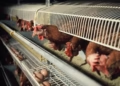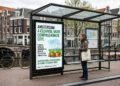


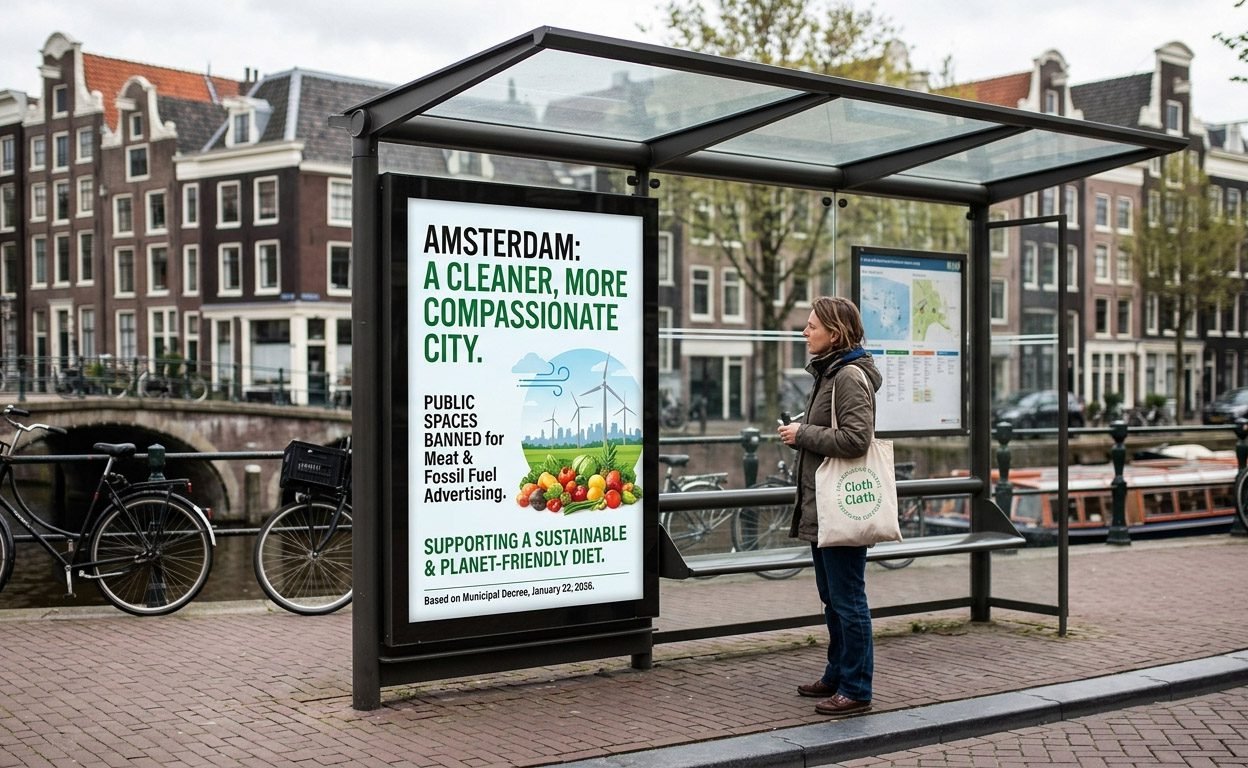
On January 23, 2026, the City of Amsterdam officially enacted a pioneering legislative framework that prohibits the promotion of meat products and fossil-fuel-intensive industries within public spaces. This decisive move, orchestrated by the municipal executive following years of political deliberation, positions the Dutch capital as the first global metropolis to implement such a comprehensive restriction on high-emission and animal-derived product marketing. The ban specifically targets advertising across the city’s extensive public infrastructure, including bus shelters, metro stations, and digital billboards owned or managed by the municipality.
The Facts: A Strategic De-normalization of Animal Agriculture
The Amsterdam City Council’s decision is rooted in a broader commitment to achieve climate neutrality and improve public health. By removing “fossil-intensive” advertisements—which include air travel, internal combustion engine vehicles, and industrial meat—the city aims to shift social norms away from carbon-heavy consumption patterns. This policy follows the precedent set by the Dutch city of Haarlem, which announced similar intentions in 2022, but Amsterdam’s implementation is significantly larger in scale due to its status as a global tourism and commercial hub.
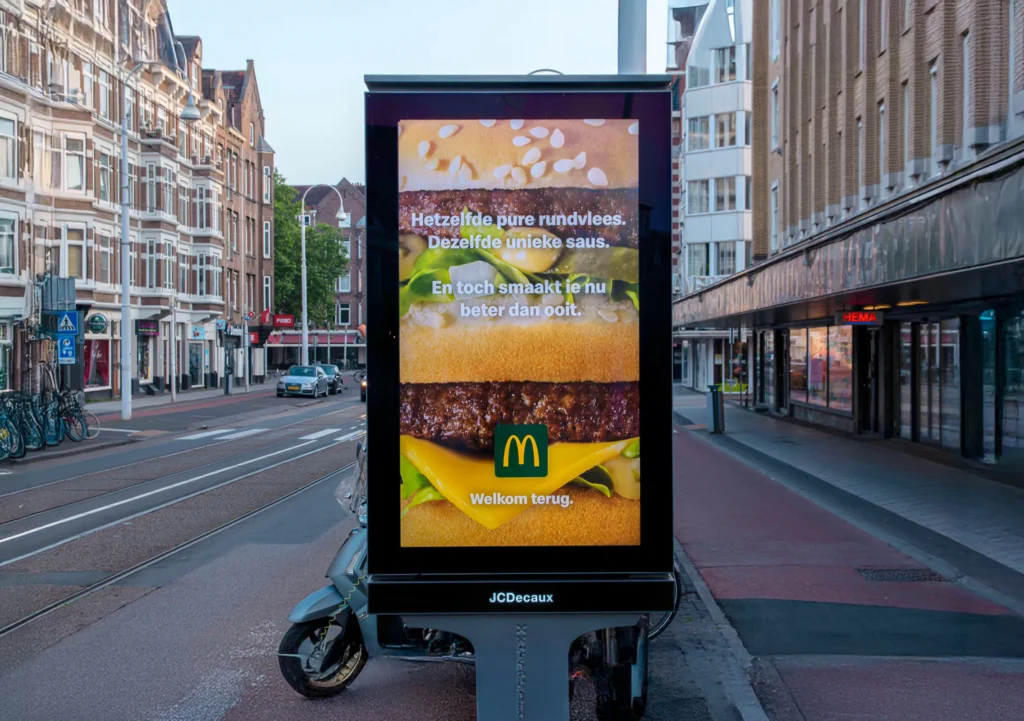
The ban is being integrated into new and renewed contracts with major outdoor advertising operators, such as JCDecaux and Global. Legally, the city is leveraging its “usage rights” of public land to dictate the types of content permitted. The specific categories of meat excluded from advertising include all products derived from industrial livestock farming, with a particular focus on red meat and processed products that carry the highest environmental and ethical footprints.
Legislative Nuance and Commercial Resistance
While the ban is immediate for new campaigns, the city must navigate existing long-term contracts, meaning a phased transition will occur throughout 2026. Critics from the advertising and meat industries have challenged the move, citing concerns over “freedom of commercial expression.” However, the Amsterdam executive has maintained that the promotion of products fundamentally at odds with the city’s sustainability goals constitutes a conflict of public interest. This legal stance is expected to serve as a test case for other European cities considering similar restrictions.
Impact Assessment: Quantifying the Shift in Sentient Lives
The implementation of an advertising ban is a potent tool for “choice architecture,” designed to reduce the demand for farmed animal products by decreasing their visibility and social prestige.
- Population Scale: Amsterdam has a population of approximately 921,000 residents, supplemented by over 20 million annual visitors.
- Consumption Reduction Estimates: Based on behavioral science models regarding the impact of advertising on dietary choices, a 5% to 8% reduction in meat consumption is projected within the urban area over the next three years as meat is “de-normalized.”
- Sentient Beings Affected: On average, a Dutch resident consumes approximately 75kg of meat per year, representing the lives of roughly 25 land animals (primarily chickens) annually. A 5% reduction in consumption across Amsterdam’s resident population alone translates to an estimated 1.15 million fewer land animals being processed within the supply chain annually to meet city demand.
- Systemic Change: Beyond the numbers, the ban strikes at the “meat paradox,” where consumers remain disconnected from the origins of their food. By removing idealized marketing, the city facilitates a more honest societal dialogue regarding the ethics of industrial farming.